
Rainwater harvesting systems capture rainfall from roofs or other collection surfaces, store it, treat it where necessary, and redistribute it for use around a property. Instead of allowing rainwater to run directly into drains or surface water systems, harvesting systems collect and reuse that water on site.
Across the UK this approach is increasingly used to reduce reliance on mains supply, manage site runoff, and support sustainability targets. From homes and farms to schools and commercial buildings, rainwater harvesting allows properties to turn rainfall into a practical water resource.
In simple terms, rainwater harvesting works by collecting rain where it lands, storing it safely, and redistributing it when it is needed.
What is rainwater harvesting?
Rainwater harvesting is the process of collecting rainfall from surfaces such as roofs, directing it through filtration, storing it in tanks, and then using that water for appropriate applications.
In many systems, harvested rainwater is used for non-potable purposes such as irrigation, washdown, toilet flushing, or agricultural operations. On some sites, additional treatment can make harvested water suitable for wider uses depending on system design and local regulations.
Rainwater harvesting systems can operate independently or alongside wider infrastructure such as Off-Grid Water Systems and Pumping & Water Infrastructure, helping sites improve resilience while reducing pressure on central supply networks.
The main parts of a rainwater harvesting system
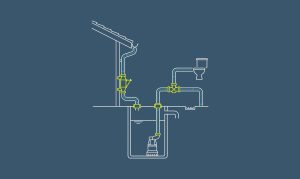
Although systems vary depending on the scale of the property, most rainwater harvesting systems include the same key components:
- Collection surface such as a roof where rainwater can be captured
- Gutters and downpipes to direct rainwater into the system
- Pre-filtration to remove leaves, debris, and sediment
- Storage tanks to hold collected rainwater
- Pumps and controls to distribute water around the site
- Overflow management to safely handle excess rainfall
When properly designed, these elements work together to provide a consistent and manageable water supply that supports everyday site operations.
Step 1: capturing rainfall
The first stage of a rainwater harvesting system is capturing rainfall from a suitable collection surface. Roofs are typically the most efficient option because they provide a clean, consistent area for rainfall to collect before being directed into gutters and downpipes.
The size of the roof area, local rainfall patterns, and the intended water demand all influence how much water can be captured. Larger roof areas generally allow greater collection volumes, which is why harvesting systems are particularly effective on farms, warehouses, schools, and commercial buildings.
Step 2: filtering the water
Before rainwater enters storage tanks it normally passes through filtration systems designed to remove leaves, debris, moss, and sediment collected from the roof.
This first stage of filtration protects the system from blockages and helps maintain water quality. Many systems also include first-flush diversion, which directs the initial rainfall away from storage tanks so that dust or contaminants accumulated on the roof do not enter the stored supply.
Step 3: storing the water
Once filtered, rainwater is directed into storage tanks. These tanks allow water collected during rainfall events to be stored and used later, smoothing out variations in rainfall and ensuring supply during dry periods.
Storage tanks can be located above ground or underground depending on the site layout and system requirements. Properly designed tanks are sealed to protect water quality while allowing safe access for inspection and maintenance.
Storage capacity plays a key role in system performance. A well-sized tank ensures that rainfall can be captured efficiently without unnecessary overflow, while still providing sufficient supply for the intended applications.
Step 4: distributing the water
Stored rainwater is typically delivered around a property using pumps and control systems. These systems maintain pressure and ensure water can be distributed reliably to where it is needed.
This is where engineered Pumping & Water Infrastructure becomes essential. Pumps transfer water from storage tanks to outlets such as irrigation systems, washdown areas, livestock troughs, or building services.
Modern control systems can also monitor tank levels, manage pump operation, and automatically switch to mains backup supply if stored rainwater becomes unavailable.
Step 5: managing overflow and runoff
Rainwater harvesting systems must also safely manage periods of heavy rainfall. When storage tanks reach capacity, overflow systems direct excess water into drainage infrastructure, soakaways, or attenuation systems.
On many sites, rainwater harvesting works alongside wider Flood Resilience measures. By capturing rainfall at source, these systems can help reduce pressure on local drainage networks and improve site-level water management.
Where rainwater harvesting works best
Homes: Residential systems can provide water for garden irrigation, vehicle washing, and toilet flushing, reducing household reliance on mains supply.
Farms and agriculture: Agricultural sites often use rainwater harvesting for washdown areas, irrigation, and livestock support. Large roof areas on barns and agricultural buildings make them ideal for rainfall collection.
Commercial and public buildings: Schools, warehouses, and commercial sites frequently use rainwater harvesting to reduce operational water demand while improving sustainability performance.
Why rainwater harvesting is becoming more important
As pressure on water resources grows and sustainability targets become more ambitious, many sites are looking for ways to reduce reliance on mains supply. Rainwater harvesting provides a practical way to capture water already falling on a property and put it to productive use.
When integrated with other solutions such as Off-Grid Water Systems, Water Reuse Systems, and engineered pumping infrastructure, rainwater harvesting can form part of a broader strategy for resilient site-wide water management.
Final thoughts
Rainwater harvesting systems work by capturing rainfall, filtering it, storing it safely, and redistributing it where it is needed. When properly engineered, these systems reduce demand on mains supply, improve water efficiency, and strengthen long-term site resilience.
For homes, farms, and commercial sites across the UK, rainwater harvesting is increasingly becoming a practical and sustainable way to manage water more effectively.